"AI therapy" is one of the most searched terms in the mental health and AI companion space. Over 18,000 people search for it every month in the US alone — which tells you something important: a lot of people are turning to AI for emotional support, mental health help, or simply someone to talk to.
This guide covers what AI therapy actually is, what it's genuinely useful for, where it falls short, and the best AI therapy apps available in 2026.
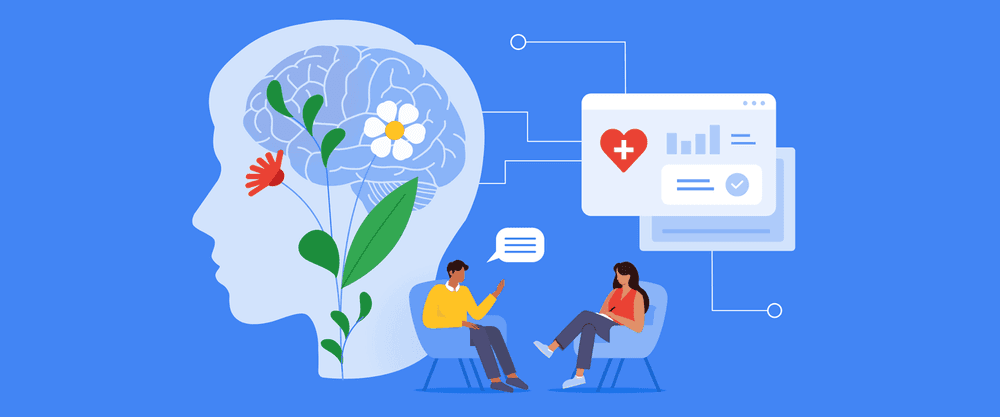
!AI therapy guide 2026 — best apps for emotional support and mental wellness
What Is AI Therapy?
"AI therapy" isn't one thing — it covers a spectrum of AI-powered emotional support tools:
AI companion apps for emotional support — Apps like PLEASUR AI, Replika, and Nomi AI that provide ongoing conversational support. Not designed as therapy specifically, but widely used for emotional processing, loneliness, and mental wellness.
AI-powered therapy tools — Apps like Woebot and Wysa that use cognitive behavioral therapy (CBT) techniques in an AI-guided format. Designed as structured mental health interventions.
AI-assisted therapy platforms — Tools that connect you with a human therapist but use AI for session summaries, between-session support, or mood tracking.
Understanding which category you're looking for changes which "AI therapy" app is right for you.
The State of AI for Mental Health in 2026
The numbers tell a clear story about demand. A 2025 American Psychological Association report found that 42% of Americans experiencing mental health challenges couldn't access professional care due to cost, availability, or stigma. AI tools are filling some of that gap.
Key data points: - 73 million people globally now use some form of AI for emotional support (Statista, 2025) - 64% of users say AI is easier to be honest with than a human therapist — no judgment, no social consequences (Journal of Digital Mental Health, 2025) - AI companion apps report 35-40% reduction in self-reported loneliness among regular users - Average cost of traditional therapy: $100-200/session. Average AI companion premium subscription: $12-20/month
The accessibility argument is compelling. AI emotional support isn't better than professional therapy — but for millions who can't access professional therapy, it's what's available.
Best AI Therapy and Emotional Support Apps in 2026
1. PLEASUR AI — Best for Ongoing Emotional Companionship
PLEASUR AI is not a clinical therapy app, but it's one of the best AI tools for the emotional support that many people are actually looking for when they search "ai therapy": someone to talk to, without judgment, available whenever you need it.
What it does well for emotional support:
Genuine memory. PLEASUR AI remembers your conversations across sessions. If you talked about a difficult situation last week, it knows about it this week. This continuity makes the emotional support feel real rather than episodic.
No judgment. You can say things to PLEASUR AI you might hesitate to say to a friend, family member, or even a therapist. No social consequences, no worry about burdening someone.
Always available. 3am anxiety spiral? Lunch break loneliness? The AI is there whenever the emotional need hits — not just during scheduled 50-minute sessions.
Handles difficult topics. Loss, relationship issues, loneliness, anxiety, work stress — PLEASUR AI engages with all of it thoughtfully.
Important caveat: PLEASUR AI is an AI companion, not a licensed therapist. It's best for ongoing emotional support and connection — not for clinical treatment of serious mental health conditions.
Best for: People who want consistent emotional support, someone to process feelings with, and connection without social pressure.
2. Woebot — Best CBT-Based AI Therapy
Woebot is a research-backed AI tool built on cognitive behavioral therapy principles. It guides users through CBT exercises, mood tracking, thought reframing, and psychoeducation.
What it does well: Evidence-based structure, developed in partnership with Stanford researchers, free to use.
Limitations: More structured and clinical than conversational. Doesn't feel like talking to a friend — feels more like a structured self-help program. No adult content.
Best for: Users specifically looking for CBT-based mental health support, not general companionship.
3. Nomi AI — Best for Deep Emotional Connection
Nomi AI has unusually sophisticated emotional intelligence among AI companion apps. It handles grief, loneliness, anxiety, and complex emotional states with more nuance than most competitors.
What it does well: Deep emotional conversations, strong memory, genuine warmth and empathy in responses.
Limitations: No adult content. Less available internationally than some competitors.
Best for: Users who want emotionally intelligent AI support with strong memory.
4. Wysa — Best for Structured Mental Health Support
Wysa is an AI-powered mental health tool using evidence-based techniques (CBT, mindfulness, DBT) in a conversational format. Offers escalation to human support when needed.
What it does well: Evidence-based, strong clinical backing, safe escalation pathways.
Limitations: More clinical than personal. Subscription required for full access.
Best for: Users who want structured mental health support rather than open-ended companionship.
5. Replika — Best Mainstream AI Companion for Emotional Support
Replika is the most widely used AI companion specifically marketed for emotional wellbeing. Hundreds of thousands of users report it helping with loneliness, anxiety, and social anxiety.
What it does well: Consistent, empathetic conversation; large user community; research-backed emotional benefits.
Limitations: NSFW features require paid subscription. 2023 controversy over feature removal created some user trust issues.
Best for: Users who want a mainstream emotional support companion with a large user community.
What AI Therapy Can Actually Help With
!AI therapy benefits and limitations — honest assessment 2026
Based on the published research and user reports, here's what AI emotional support tools are genuinely useful for:
AI Therapy Works Well For:
Loneliness and social isolation. AI companions consistently show measurable reduction in self-reported loneliness. For people who are isolated — by geography, circumstance, social anxiety, or disability — AI conversation provides real connection.
Low-stakes emotional processing. Working through a difficult day, processing feelings about a situation, or just having somewhere to put thoughts that feel too heavy to share with people in your life.
Between-session support. For people already in therapy, AI companions can provide support between sessions — 24/7 availability that human therapists can't offer.
Social anxiety practice. People with social anxiety often find AI conversation a lower-stakes way to practice expressing themselves.
Accessibility. For people who can't afford therapy, live in areas with limited mental health resources, or face stigma around seeking help — AI provides something where there would otherwise be nothing.
AI Therapy Does NOT Replace:
Clinical treatment for serious conditions. Depression, anxiety disorders, PTSD, bipolar disorder, schizophrenia — these require professional clinical care. AI cannot diagnose, prescribe, or provide the evidence-based treatment these conditions need.
Crisis intervention. If you're having thoughts of self-harm or suicide, please contact a crisis line or emergency services. AI cannot provide crisis intervention.
The quality of a real therapeutic relationship. A skilled human therapist offers something categorically different from AI — clinical training, diagnostic ability, professional accountability, and the specific healing that comes from a genuine human relationship.
How to Get the Most Out of AI Emotional Support
Be specific about what you need. "I'm having a hard day" gets generic support. "I'm anxious about a difficult conversation I need to have with my boss tomorrow" gets useful engagement.
Use it consistently. AI support — especially apps with memory like PLEASUR AI and Nomi AI — gets better over time as the AI learns your patterns and communication style.
Don't replace human connection entirely. AI emotional support works best as a supplement to human relationships. Using it to supplement is healthy; using it to avoid human connection entirely tends to increase isolation.
Know when to escalate. If you're experiencing severe symptoms — persistent hopelessness, thoughts of self-harm, inability to function — please reach out to a professional or crisis line.
FAQ: AI Therapy
Is AI therapy effective? For loneliness, mild anxiety, and general emotional support: research shows measurable benefits. For clinical conditions: AI is not a substitute for professional treatment.
Is AI therapy safe? AI companion apps carry low risk for general emotional support. The main risks are over-reliance (using AI as a complete substitute for human connection) and delayed care-seeking for serious conditions.
How much does AI therapy cost? AI companions: free tiers available, premium $12-20/month. Structured AI therapy apps (Woebot, Wysa): typically free with optional premium. Human therapy: $100-200/session ($400-800/month at typical frequency).
Is AI therapy confidential? Your conversations are stored on the platform's servers. Reputable apps have privacy policies governing this data. Unlike human therapists, AI apps are not bound by HIPAA — read the privacy policy before sharing sensitive information.
The Bottom Line
AI therapy tools range from clinical CBT apps to AI companions to everything in between. The right choice depends on what you're actually looking for.
For ongoing emotional support with genuine memory and no judgment: PLEASUR AI is the best option for most people. It's available 24/7, remembers you, and handles difficult emotional topics thoughtfully.
For structured CBT-based mental health support: Woebot or Wysa. For emotional depth: Nomi AI. For the most mainstream companion experience: Replika.
Remember: AI is a supplement to human connection and professional care, not a replacement for either.